Luxury retail is entering a new era. Today’s high-end consumers expect more than exceptional products and refined interiors—they want brands to demonstrate genuine environmental responsibility without compromising on quality, craftsmanship, or experience.
This shift has accelerated the demand for green retail solutions, pushing luxury brands to rethink how they design, build, and operate their retail spaces. As sustainability moves from a “nice to have” to a brand expectation, the luxury retailers that adapt early will define the market in 2026 and beyond.
If you’re exploring how to reduce carbon footprint in retail stores, this guide outlines the key focus areas luxury brands must prioritise.
Zero-waste Manufacturing Processes
Sustainability is not only environmentally responsible—it also makes long-term business sense. Luxury brands are increasingly adopting zero-waste manufacturing processes to minimise material loss and improve efficiency.
Closed-loop production systems allow waste and by-products to be reused or recycled instead of discarded. For example, excess materials and offcuts from fitout fabrication can be transformed into new components, significantly reducing raw material consumption while maintaining premium quality standards.
Ethical Sourcing Partnerships
Ethical sourcing has become a defining factor for luxury brands. Building long-term relationships with certified, environmentally responsible suppliers ensures that materials are produced ethically and delivered sustainably.
By working directly with vetted suppliers, brands gain greater transparency across their supply chain, ensure compliance with environmental standards, and reinforce trust with increasingly conscious consumers.
Circular Economy Integration for Luxury Materials
The future of sustainable luxury lies in the circular economy. Applying circular design principles means creating retail components and materials that are designed for disassembly, repair, and reuse.
Luxury brands can reintroduce reclaimed materials into new projects, reducing reliance on virgin resources while creating value from previously discarded components. This approach supports sustainability goals and opens opportunities for cost optimisation and innovation.
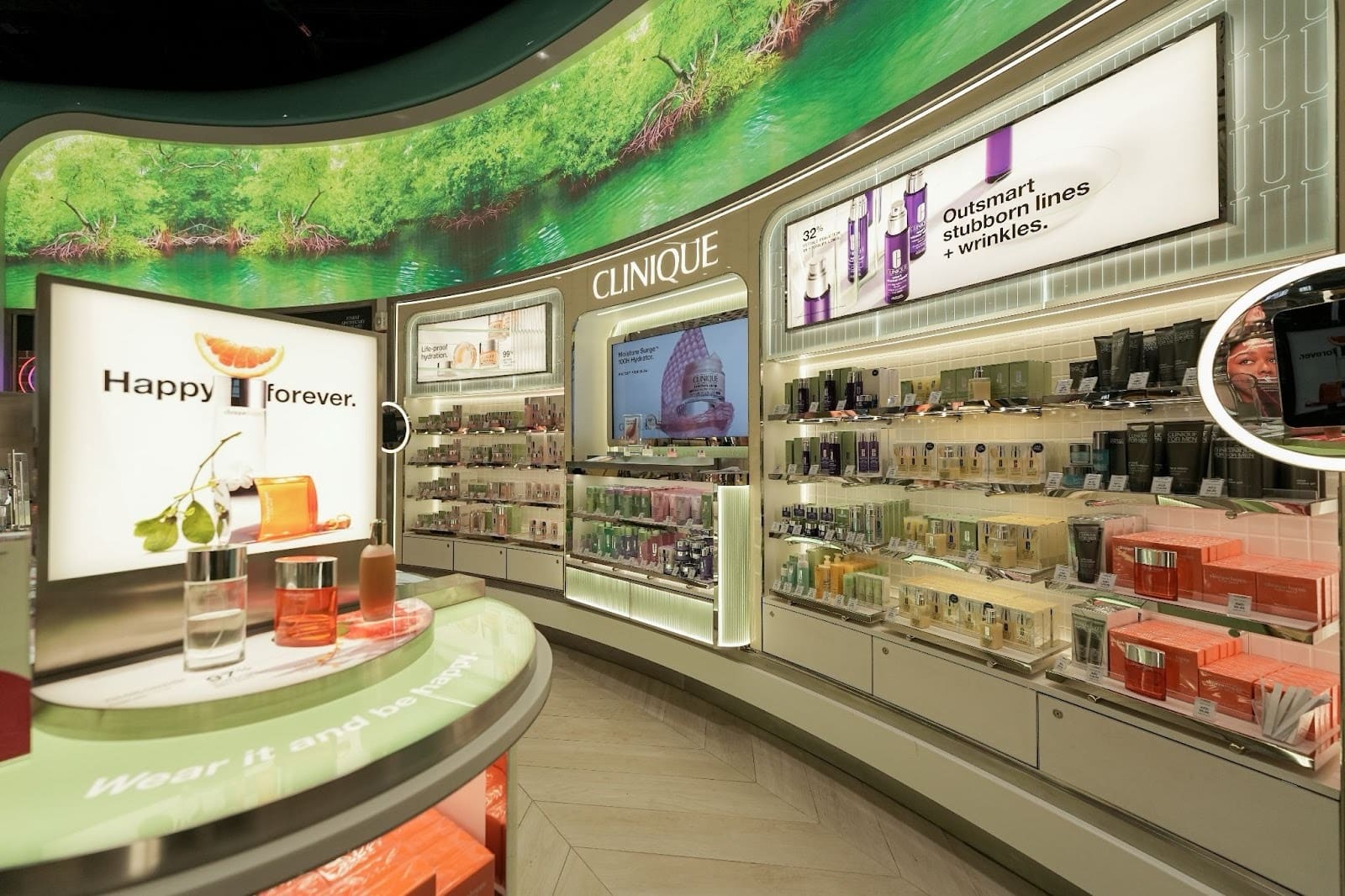
Virtual Try-On Technology is Reducing Product Returns
Product returns contribute significantly to retail waste and carbon emissions. Technologies such as augmented reality (AR) and AI-powered virtual fitting rooms are transforming this challenge.
By allowing customers to visualise fit, scale, and appearance before purchasing, virtual try-on solutions reduce unnecessary returns, lower transportation emissions, and create a more confident buying experience—especially valuable in luxury retail environments.
AI-Powered Inventory Management
Overproduction remains one of the biggest sustainability challenges in retail. Advanced AI-powered inventory management systems use machine learning to accurately forecast demand, analyse buying patterns, and monitor stock levels.
These insights help luxury brands avoid excess production, minimise waste, and maintain optimal inventory levels—aligning operational efficiency with environmental responsibility.
Transparent Carbon Footprint Reporting
Transparency is now essential for luxury brand credibility. Modern consumers expect clear, data-driven insights into a brand’s environmental impact.
Accurate carbon footprint reporting allows retailers to measure emissions across design, manufacturing, logistics, and installation. Partnering with luxury retail solutions providers that offer carbon accounting for offline retail enables brands to track progress, identify inefficiencies, and implement measurable reductions aligned with global standards.
Conclusion
As luxury brands move toward 2026, sustainability will no longer be a differentiator—it will be a requirement. The most impactful progress will come from rethinking supply chains, adopting eco-conscious materials, and leveraging digital tools to reduce waste at every stage of the retail lifecycle.
However, true success lies in sustainability that customers can genuinely experience—from responsibly sourced materials to transparent carbon reporting.
At Alpha Nero, we support luxury brands in the UAE and beyond in adopting sustainable retail solutions without compromising on quality or design excellence. With in-house capabilities spanning design optimisation, fabrication, installation, and logistics, we deliver fully integrated solutions.
Powered by our in-house platform, Leaf, we provide carbon management services for luxury retail brands—helping measure environmental impact accurately and implement meaningful, measurable reductions.
FAQs
How does Alpha Nero help luxury brands measure their carbon footprint?
Alpha Nero uses Leaf, our in-house carbon management platform, to accurately measure carbon emissions across design, manufacturing, logistics, and installation. Leaf provides data-driven insights that help luxury brands understand their environmental impact and make informed decisions to reduce it.
Can Alpha Nero track carbon emissions for physical retail stores?
Yes. Leaf is specifically designed to support offline luxury retail environments. It tracks emissions related to materials, fabrication processes, transportation, and on-site installation—offering full visibility into a store’s carbon footprint.
Does Alpha Nero provide carbon reporting aligned with global standards?
Absolutely. Leaf benchmarks carbon data against globally recognised frameworks such as the Greenhouse Gas (GHG) Protocol, ensuring transparent, credible, and audit-ready sustainability reporting for luxury brands.
How does Alpha Nero support long-term sustainability goals beyond fitouts?
Beyond sustainable shopfitting, Alpha Nero helps brands build long-term sustainability strategies using insights generated through Leaf. These insights allow brands to compare projects, track improvements over time, and identify areas for continuous carbon reduction across future retail rollouts.
Can Leaf help luxury brands reduce emissions, not just measure them?
Yes. Leaf goes beyond measurement by identifying carbon hotspots within retail projects and suggesting optimisation opportunities—such as alternative materials, improved logistics planning, or more efficient fabrication methods—without compromising luxury standards.
Is Leaf suitable for multi-store or regional retail rollouts?
Yes. Leaf is ideal for luxury brands scaling across regions. It allows brands to track, compare, and optimise carbon performance across multiple stores, cities, and countries, supporting consistent sustainability goals across the Middle East, Africa, and Southeast Asia.
Does Alpha Nero manufacture sustainable fitout components?
Yes. Alpha Nero manufactures sustainable fitout components in-house and tracks their environmental impact using Leaf—ensuring responsible material use, efficient production, and transparent reporting from fabrication through installation.
Why should luxury brands choose Alpha Nero for sustainable retail solutions?
Alpha Nero combines design excellence, in-house manufacturing, and sustainable software into one integrated solution. With Leaf providing measurable carbon insights, brands gain not only beautifully crafted retail spaces but also verified sustainability performance.
Can I see sustainability data for my project before it begins?
Yes. Using Leaf, Alpha Nero can provide pre-construction carbon projections, helping brands make informed design and material decisions early—when sustainability impact and cost optimisation are most effective.
What does Alpha Nero do?
Alpha Nero provides complete shopfitting solutions for commercial interiors, including design, fabrication, installation and logistics
In which regions does Alpha Nero provide its services?
Alpha Nero delivers luxury retail, hospitality and residential projects across the Middle East, Africa, and Southeast Asia.